This week on Reddit

A post on Reddit exploded this week because it captured a feeling almost every trader experiences in the beginning.
A new trader wrote:
“I genuinely want to learn trading, but I don’t know who to trust anymore.”
And honestly, that one sentence explains why so many people stay stuck before they ever even place a trade.
They described the same cycle thousands of aspiring traders go through:
You discover a trading YouTuber.
You start watching their videos.
You feel inspired.
Then you search their name online and suddenly find people calling them fake, scammers, or frauds.
So you stop trusting them.
Then you repeat the process with someone else.
After enough cycles, most people become completely paralyzed.
The truth is, that skepticism is actually healthy.
The internet has turned trading into entertainment. Flashy lifestyles, rented Lamborghinis, Discord alerts, “95% win rate” thumbnails, and promises of financial freedom in 30 days have completely distorted what real trading looks like.
Most trading content online is not designed to make you profitable.
It is designed to get clicks, views, subscriptions, and course sales.
That does not mean every educator is fake. But it does mean you need to learn how to filter signal from noise.
The First Red Flag
If someone is promising unrealistic consistency, be careful.
Anyone claiming:
• 90% win rates
• Never losing
• Guaranteed profits
• “Secret indicators”
• RSI and MACD crossover magic strategies
• Turning $500 into millions quickly
…is usually selling hope, not skill.
Real trading is much less exciting than social media makes it seem.
Professional traders think in probabilities, risk management, process, psychology, and consistency over hundreds of trades. Not viral screenshots.
The Better Approach
One of the best comments under that Reddit thread said something simple but powerful:
“Start with books, not YouTube.”
That advice alone could save beginners years of confusion.
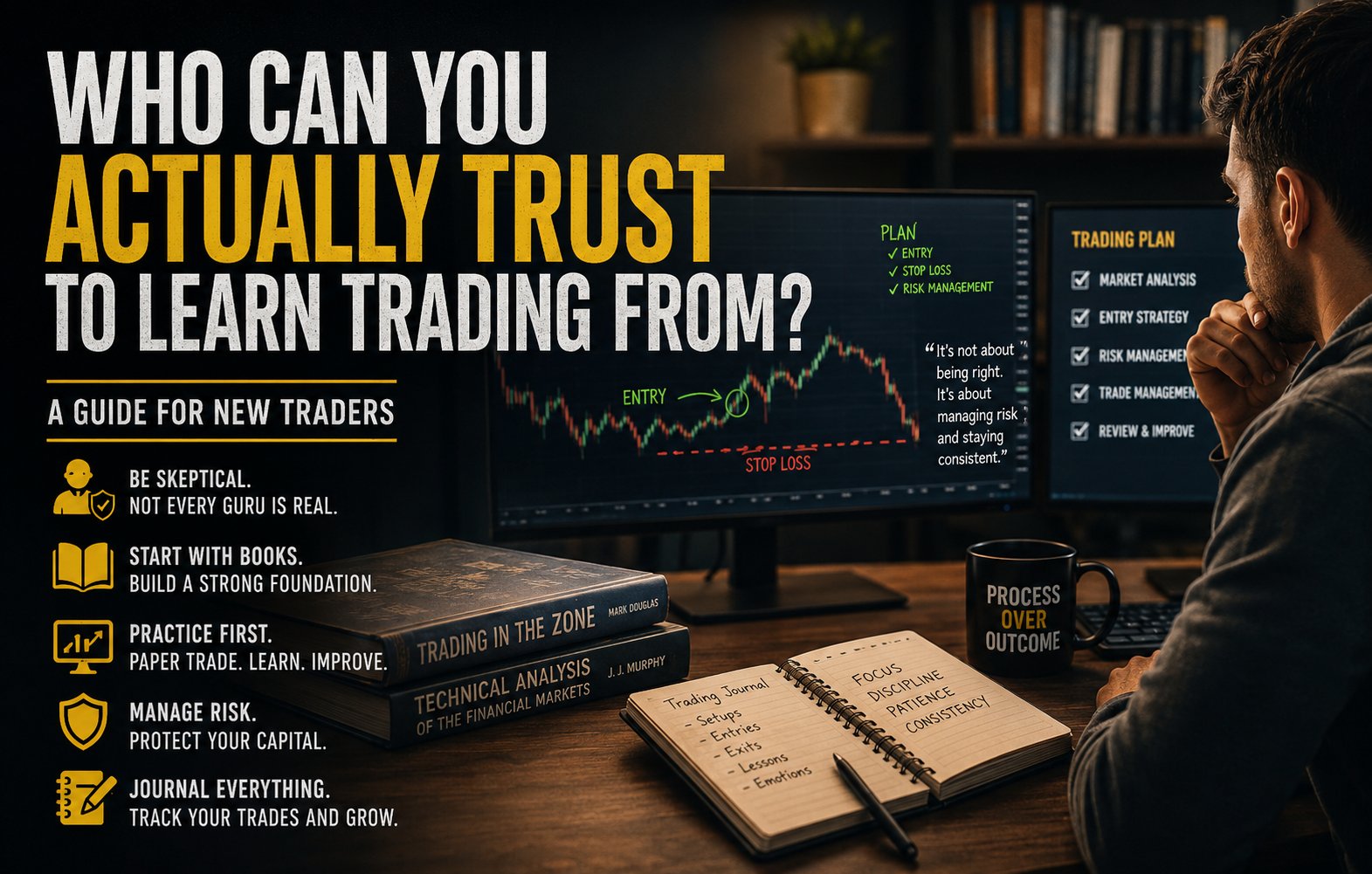
Two books that repeatedly stood the test of time were mentioned:
• Trading in the Zone by Mark Douglas
• Technical Analysis of the Financial Markets by John J. Murphy
and Mastering the Trader Within by me (Anmol Singh)
These are not hype driven social media products. They are foundational resources that traders have used through multiple market cycles.
The reality is that successful trading is not built on finding a magical strategy.
It is built on:
• Risk management
• Emotional control
• Position sizing
• Patience
• Repetition
• Journaling
• Statistical thinking
• Consistency over time
None of those things go viral on TikTok.
Why Most Beginners Fail
Most people enter trading wanting freedom.
But subconsciously, they are chasing certainty.
They want someone to tell them:
• exactly what to buy
• exactly when to enter
• exactly when to sell
• and guarantee they will make money
The market does not work like that.
Trading is ultimately a decision making skill under uncertainty.
That is why psychology matters so much.
The market exposes every emotional weakness:
• fear
• greed
• impatience
• revenge trading
• ego
• lack of discipline
This is why many experienced traders will tell you trading becomes more of a personal development journey than a financial one.
Paper Trading Is Underrated
Another recurring theme in the discussion was the importance of paper trading.
Not for a few days.
For months.
Many beginners rush into real money because they believe live trading will force them to learn faster. Usually it just forces them to lose faster.
Paper trading gives you time to:
• build pattern recognition
• test a process
• learn execution
• practice journaling
• study your emotions without financial damage
Then when you finally go live, start small.
One commenter mentioned beginning with around $600 and treating it as tuition, not an investment expected to make you rich immediately.
That mindset shift is important.
Your first account is not there to change your life.
It is there to educate you.
The Market Will Humble Everyone
One of the hardest truths about trading is this:
The market does not care about confidence.
It does not care about motivation.
It does not care how badly you want success.
The market rewards discipline, preparation, patience, and adaptability.
And unfortunately, those traits are developed slowly.
That is why the traders who survive long term usually stop searching for shortcuts.
They stop hopping between indicators and mentors every week.
They stop chasing dopamine.
Instead, they focus on mastering one process deeply.
So Who Should You Trust?
Trust people who:
• talk honestly about losses
• focus heavily on risk management• emphasize process over predictions
• show long term consistency instead of flashy screenshots
• encourage journaling and accountability
• do not promise unrealistic outcomes
They should be able to call out trades before entering them, with the exact entry price and stop loss shared before the trade even triggers.
Most importantly, trust your own experience over marketing.
The market itself will become your greatest teacher if you approach it with humility, patience, and a willingness to learn slowly.
Because real trading is not about getting rich quickly.
It is about becoming the kind of person capable of handling uncertainty consistently over time.