
The Most Expensive Addiction in Trading
If I had to identify one flaw that destroys more traders than any technical mistake, any indicator, any market condition, or any strategy failure, it would be this:
The need to be right.
Not the desire to make money.
The desire to be right.
At first glance, those sound like the same thing.
They are not.
In fact, they are often complete opposites.
One of the strangest things about trading is that the skills that help people succeed in most areas of life can actually hurt them in the market.
Think about school.
You are rewarded for being right.
Think about your career.
You are rewarded for being right.
Think about business.
You are rewarded for being right.
Think about relationships.
People want to be right there too.
From the time we are children, we are conditioned to seek correctness.
Then we arrive in the market.
Suddenly we discover something that feels completely backwards.
The market does not reward being right.
The market rewards making money.
And those two things are often very different.
The Trader Who Predicted Everything
I once met a trader who could predict market direction remarkably well.
He knew economic data.
He understood market structure.
He understood sectors.
He understood sentiment.
He could explain exactly why stocks were moving.
When the market rallied, he could tell you why.
When the market declined, he could tell you why.
When interest rates moved, he could explain the implications.
When earnings were released, he could break down every detail.
There was only one problem.
He wasn’t making money.
In fact, he was losing money.
How was that possible?
Simple.
He was more interested in proving he was right than managing risk.
When trades moved against him, he refused to exit.
After all, he was right.
The market was wrong.
Eventually the market would realize its mistake.
Except the market never did.
His account paid the price.
The Market Does Not Care
This may be one of the hardest lessons a trader ever learns.
The market does not care about your opinion.
The market does not care about your analysis.
The market does not care about your prediction.
The market does not care about your intelligence.
The market does not care how much work you put into your research.
The market does not care about your conviction.
The market only cares about supply and demand.
Nothing more.
Nothing less.
You can have the most brilliant thesis in the world.
If buyers are not interested, the stock may still fall.
You can have a terrible thesis.
If institutions are aggressively buying, the stock may still rise.
This reality frustrates many traders because it removes their sense of control.
But accepting it is one of the most liberating experiences in trading.
The Ego Trap
The desire to be right is rarely about money.
It is about ego.
Being right feels good.
Being wrong feels bad.
Our brains naturally seek validation.
When we predict something correctly, we feel intelligent.
We feel skilled.
We feel superior.
When we are wrong, we feel embarrassed.
We feel frustrated.
We feel exposed.
Unfortunately, the market exploits this weakness relentlessly.
Many traders hold losing positions because selling would require admitting they were wrong.
Many traders average down because selling would require admitting they were wrong.
Many traders ignore stop losses because selling would require admitting they were wrong.
Many traders argue with the market because selling would require admitting they were wrong.
The need to protect the ego becomes more important than protecting capital.
That is a dangerous place to be.
Why Tops and Bottoms Are So Attractive
One of the clearest examples of this problem appears when traders try to pick tops and bottoms.
Everyone wants to be the trader who called the exact high.
Everyone wants to be the trader who bought the exact low.
Why?
Because it feels heroic.
It feels impressive.
It creates a story.
Imagine two traders.
The first trader buys a stock during a healthy uptrend after a simple pullback.
The stock continues higher.
The trader makes money.
The second trader shorts a stock at what turns out to be the exact top.
The stock collapses.
The trader makes money.
Who gets more attention?
Almost always the second trader.
The first trader made money.
The second trader made a prediction.
People love predictions.
The market loves profits.
There is a difference.
Why Traders Fight Strong Stocks
One of the most common mistakes newer traders make is shorting strong stocks.
A stock has already rallied significantly.
The trader looks at it and says:
“It has gone too far.”
“It cannot go any higher.”
“It is overextended.”
“It is due for a pullback.”
Maybe.
But maybe not.
The problem is that strength often attracts more strength.
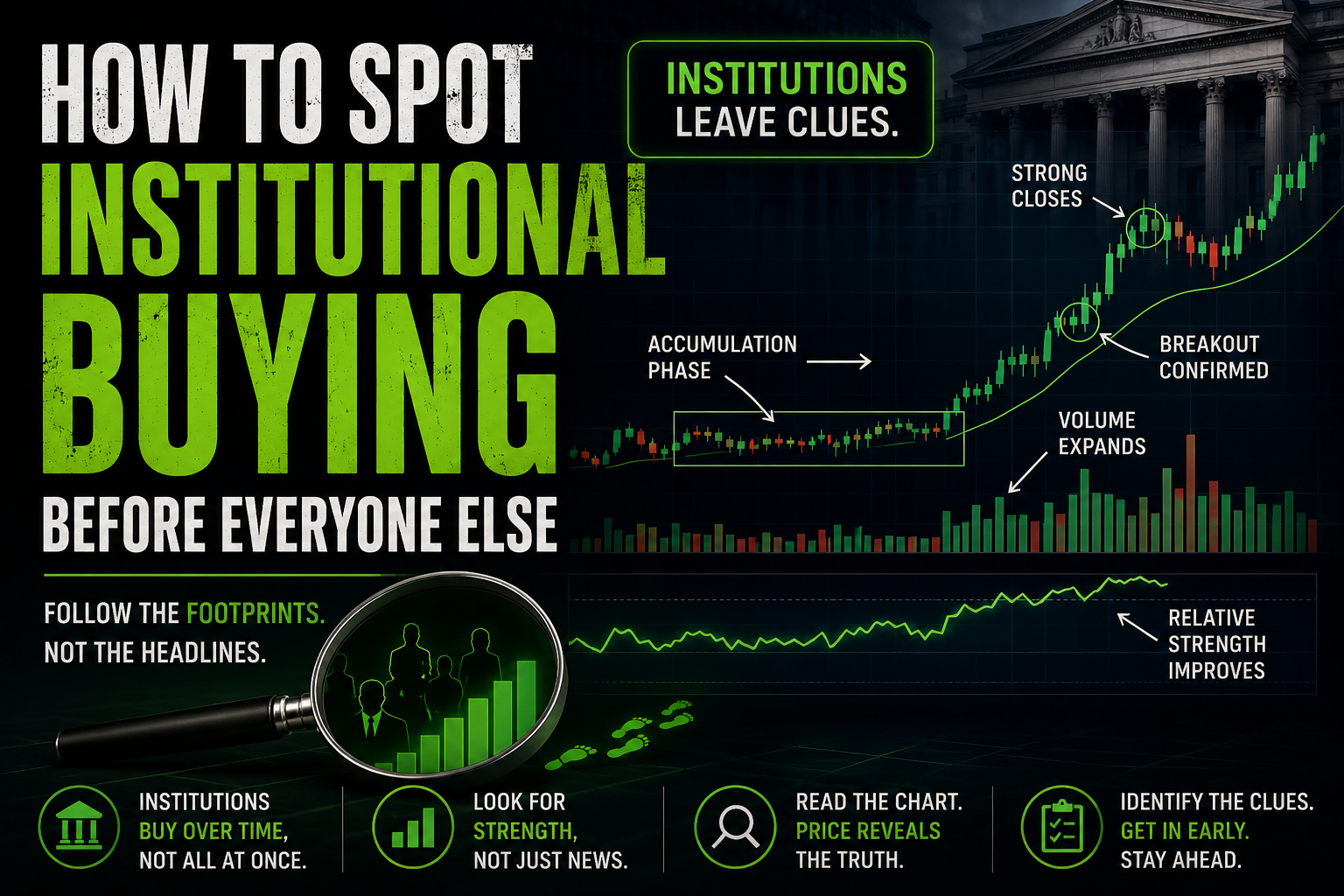
Institutional buyers rarely purchase their entire position at once.
They accumulate.
They build positions over time.
This creates trends.
Yet many traders spend their entire day trying to find reasons why strong stocks should decline.
They are not trading what is happening.
They are trading what they think should happen.
That is a dangerous habit.
The Same Problem Exists on the Long Side
The opposite occurs with weak stocks.
A stock falls.
Then falls again.
Then falls some more.
The trader looks at it and thinks:
“It cannot possibly go lower.”
“It is cheap.”
“It is oversold.”
“It is due for a bounce.”
Again, maybe.
But maybe not.
Weak stocks often become weaker.
The biggest declines in market history all started after someone declared a stock could not go lower.
Price does not care what seems reasonable.
Price does not care what appears fair.
Price only reflects current supply and demand.
The Professional Approach
Professionals think differently.
Professionals are not trying to predict the future.
Professionals are trying to identify probabilities.
There is a subtle but important difference.
Imagine a poker player.
A professional poker player does not need to know the next card.
They simply need to understand the odds.
If the odds favor them, they take the bet.
If the odds do not favor them, they fold.
Trading works the same way.
You do not need certainty.
You need an edge.
You need a repeatable process.
You need risk management.
You need discipline.
The need to be right disappears when probabilities become the focus.
The Freedom of Being Wrong
One of the most powerful shifts a trader can make is becoming comfortable with being wrong.
Not careless.
Not reckless.
Comfortable.
There is a huge difference.
Many traders spend enormous energy trying to avoid being wrong.
Professional traders understand something different.
Being wrong is part of the business.
No strategy wins every time.
No trader wins every time.
No setup works every time.
Losses are not evidence of failure.
They are evidence of participation.
The goal is not avoiding losses.
The goal is managing losses.
Once you understand this, trading becomes dramatically easier.
The Best Traders Change Their Minds Quickly
One of the characteristics shared by many successful traders is flexibility.
They are not emotionally attached to opinions.
They are not married to predictions.
They are not trying to defend a thesis.
When new information appears, they adjust.
When price changes, they adapt.
When evidence changes, they change.
This flexibility allows them to survive.
The market is constantly evolving.
A rigid trader eventually breaks.
An adaptable trader survives.
A Simple Exercise
Take your last twenty losing trades.
Look at them honestly.
Ask yourself:
Did I exit because my plan said to exit?
Or did I exit because I could no longer tolerate the pain?
Now ask another question.
How many of those trades did you hold longer than planned because you believed you were right?
The answer may surprise you.
For many traders, the majority of large losses begin with a simple thought:
“I’ll give it a little more room.”
Translation:
“I still think I’m right.”
That sentence has destroyed countless trading accounts.
What Truly Matters
The market is not a debate competition.
The market is not a prediction contest.
The market is not an intelligence test.
The market is a risk management business.
You can be wrong often and still make money.
You can be right often and still lose money.
That reality confuses many people.
But once you accept it, your trading changes forever.
The objective is not perfection.
The objective is profitability.
The objective is not proving yourself.
The objective is growing your account.
The objective is not winning arguments.
The objective is managing probabilities.
Final Thoughts
The desire to be right is one of the most expensive addictions in trading.
It causes traders to hold losers.
It causes traders to ignore stops.
It causes traders to fight trends.
It causes traders to pick tops.
It causes traders to pick bottoms.
Most importantly, it causes traders to place their ego above their account.
The market has a way of punishing that behavior.
The best traders understand a simple truth:
They do not need to be right.
They simply need to make money.
Sometimes that means admitting they are wrong.
Sometimes that means taking a loss.
Sometimes that means changing their mind.
Sometimes that means walking away.
The trader who needs to be right eventually runs out of money.
The trader who focuses on probabilities stays in the game long enough to succeed.
And in trading, survival is often the first step toward mastery.